Blog›Take Control of Your EV Charging: The Power of Access Management
5 min readJune 13, 2025
Hospitality
Take Control of Your EV Charging: The Power of Access Management
A practical look at RFID, app-based and PIN code access control methods and how they let charging operators manage permissions, shape business models and protect revenue.
A practical look at RFID, app-based and PIN code access control methods and how they let charging operators manage permissions, shape business models and protect revenue.
5 min readJune 13, 2025Hospitality · Access control
Apply it to a real site
Need this logic translated into a charging project?
If the article touches pricing, hardware, hospitality, reporting or operational setup, the
next step is a real project conversation.
Unrestricted public charging and fully controlled private charging sit at opposite ends of a spectrum. Most commercial sites need something in between: a system that lets the right users charge at the right price, while preventing misuse or revenue leakage. Access management is what makes that possible.
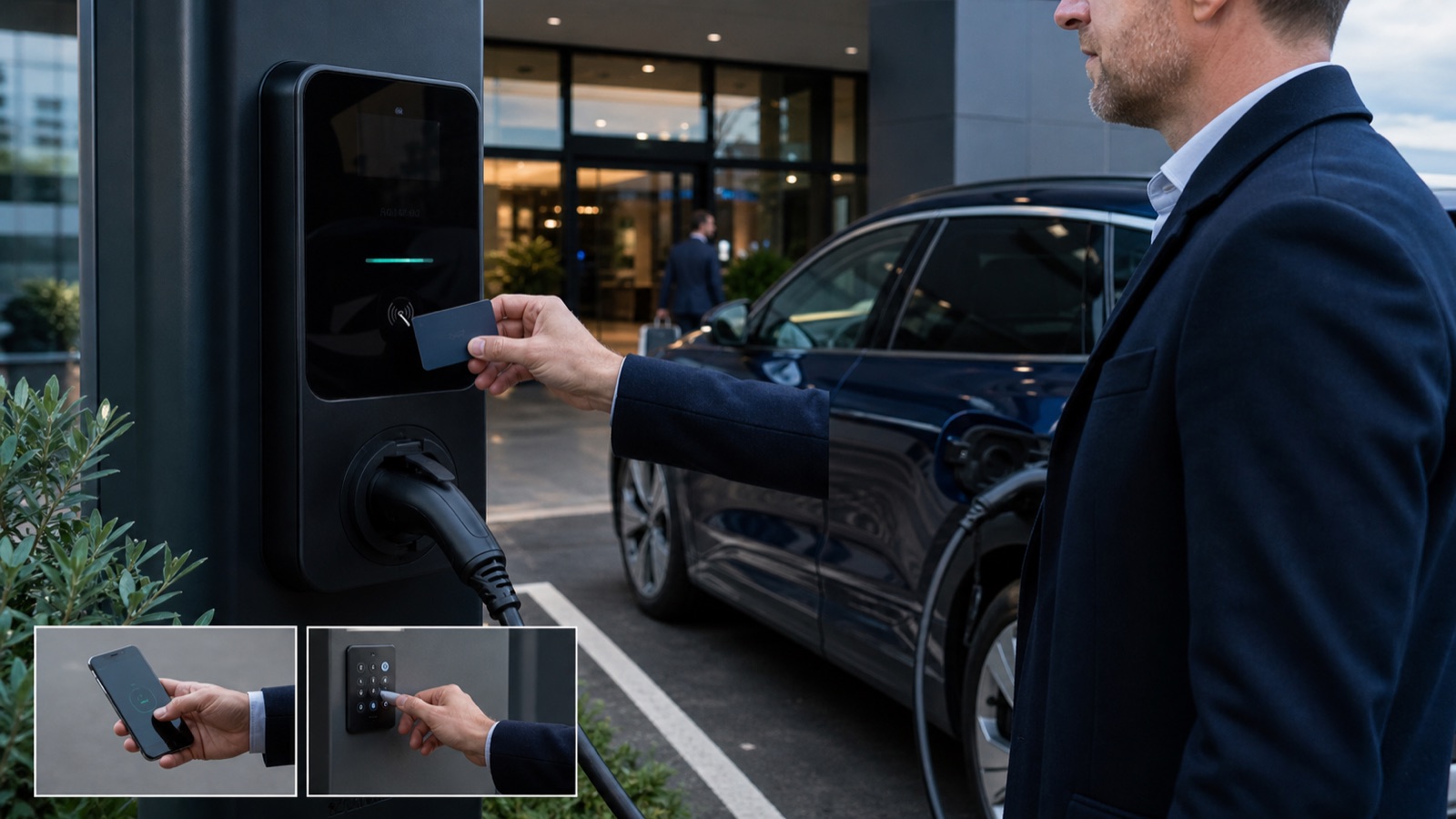
RFID card access for employees and fleet drivers
App-based access for registered users
PIN code access for guests and visitors
Mixed-access models for semi-public sites
02
Methods compared: RFID, app and PIN
RFID cards are reliable and frictionless for regular users like employees or fleet drivers — they tap and charge without any screen interaction. App-based access works for registered customers who expect a digital experience. PIN codes are the lowest-friction guest option: no card, no download, just a code shared at reception.
RFID: best for recurring known users
App: best for loyalty and registered customers
PIN: best for one-time guest access
Hybrid setups for sites with multiple user types
03
Flexible permissions that reflect how your site works
Good access management lets operators assign different permissions and pricing rules to different user groups. Guests pay one rate, employees charge for free, fleet vehicles get invoiced monthly — all managed from the same platform without manual intervention for each session.
User group pricing differentiation
Free access for internal users alongside paid public charging
Time-based and location-based access rules
Centralised permission management across multiple sites