Blog›Smarter Charging Starts with Smarter Data: How EV Analytics Drive Performance and Growth
4 min readJune 26, 2025
Informational
Smarter Charging Starts with Smarter Data: How EV Analytics Drive Performance and Growth
How real-time analytics, automatic notifications and monthly reports help EV charging operators improve reliability, plan smarter infrastructure and grow their business.
How real-time analytics, automatic notifications and monthly reports help EV charging operators improve reliability, plan smarter infrastructure and grow their business.
4 min readJune 26, 2025Analytics · Informational
Apply it to a real site
Need this logic translated into a charging project?
If the article touches pricing, hardware, hospitality, reporting or operational setup, the
next step is a real project conversation.
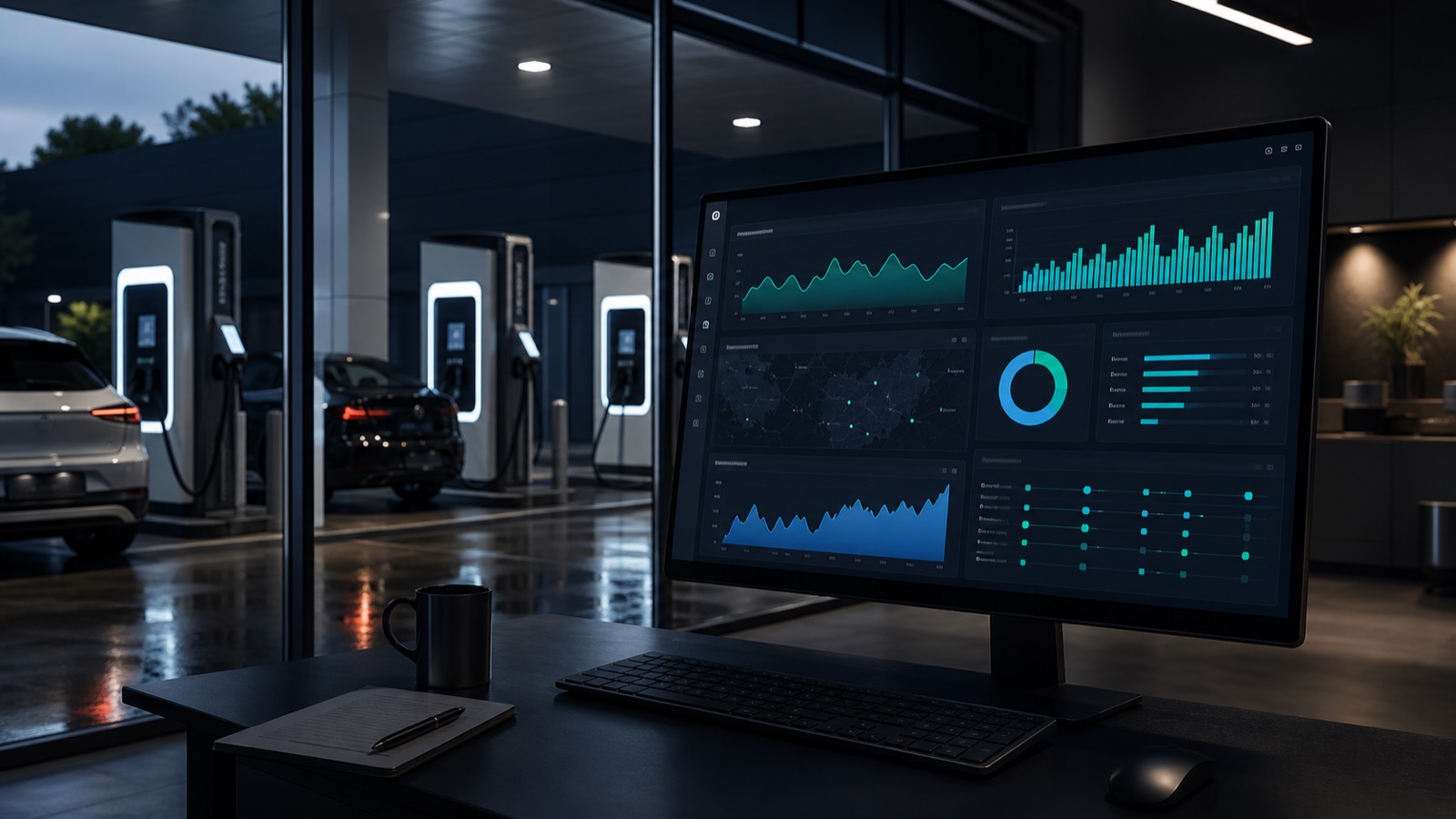
Most EV charger owners start by asking whether their chargers are working. The better question is what the data tells them about usage patterns, peak demand, fault frequency and revenue potential. Real-time analytics shift the conversation from reactive maintenance to proactive business management.
Real-time charger status and session visibility
Usage patterns and peak demand tracking
Automatic fault and status notifications
Revenue and session count dashboards
02
Notifications that prevent revenue loss
Charger downtime is invisible unless someone is watching. Automatic notifications alert operators the moment a charger goes offline, reports a fault or stops accepting sessions — without requiring anyone to log into a dashboard manually. Faster response means fewer lost sessions and fewer frustrated drivers.
Instant alerts on charger faults or offline events
Session interruption detection
Configurable notification routing per operator
Reduced response time to on-site issues
03
Monthly reports that inform growth decisions
A structured monthly report gives operators a consistent view of how their charging service performed: total sessions, energy delivered, revenue earned, charger uptime and top-usage periods. Over time, the data supports decisions on whether to add chargers, adjust pricing or renegotiate grid connection capacity.